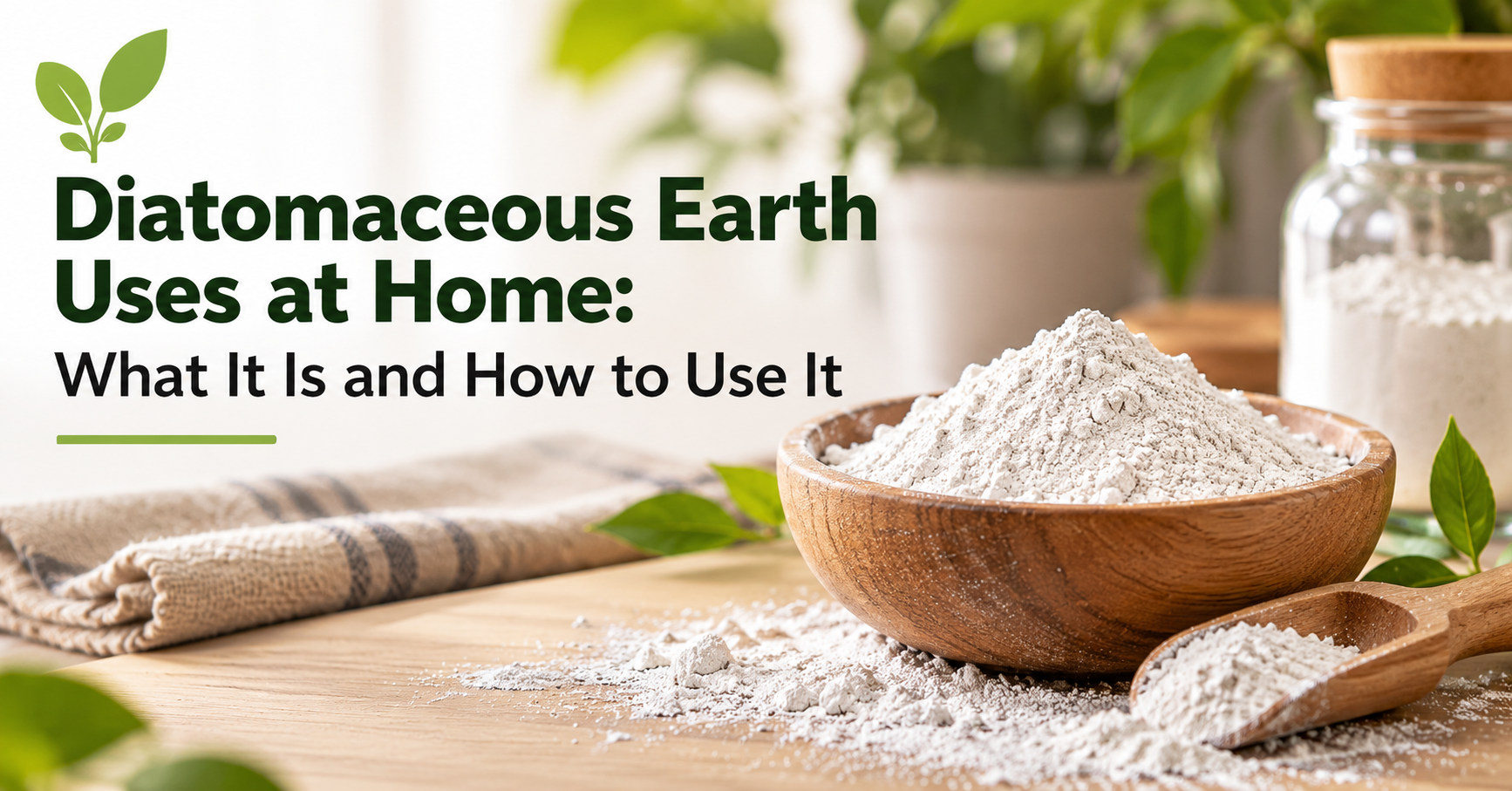
Most pesticides are harmful to nature as well as to humans, whereas the diatomaceous earth is a natural powder and stands out as a versatile and effective option. It is made from fossilized remains of diatoms, microscopic algae-like organisms, diatomaceous earth is renowned for its myriad of uses, ranging from pest control to personal care. Most of the time it is used in gardens to protect against pests a lot. In this blog, we explore the use of diatomaceous earth at home in detail.
Diatomaceous earth powder (also called DE, diatomite, kieselguhr or infusorial earth) is one of the most useful natural powders for the home. This guide explains what diatomaceous earth is, its main uses, and how to use diatomaceous earth for bed bugs, cockroaches, ants and more. It also covers food grade safety.
What Is Diatomaceous Earth?
Earth is a Where Diatomaceous earth is made from the fossilized remains of diatoms in rivers, lakes, and oceans. It takes time of thousands of years in water to transform from diatoms to siliceous sedimentary rock that collects in the form of fine white powder like dust particles. This diatomaceous earth powder is rich in silica, a compound that lends it remarkable absorbent and abrasive properties.
Diatomaceous Earth Meaning and Appearance
Diatomaceous earth meaning: it is a soft, naturally formed sedimentary rock made of the fossilized shells of diatoms. When crushed, it becomes a fine, off-white to white powder.
- What it looks like: a soft, chalky, flour-like powder that feels light and dusty.
- Other names: diatomite, kieselguhr, infusorial earth, DE.
- How to pronounce it: dy-uh-tuh-MAY-shus earth.
- Why it works: under a microscope, the particles have tiny sharp edges and many pores, which helps them absorb moisture and oils.
Types of Diatomaceous Earth
There are two types of diatomaceous earth: food-grade and feed-grade
- Food Grade: DE is used in both gardens and your home main reason is that it does not contain any harmful additives, such as used in toothpaste, beverages, skin care products, animal feed, medications, rubber, and many other things. It helps in cholesterol and bone health some claim that.
- Feed Grade: This type of DE is used in gardens in the form of natural pesticides to reduce insects. Sprinkling in your garden can save your plants from pets. DE also known as Crystalline silica, which can cause lung disease, respiratory system inflammation, and even cancer if inhaled. Crystalline DE can only be found in a very small number of products labelled as pesticides.
Food Grade Diatomaceous Earth vs Other Grades
| Type | Typical Use | Notes |
| Food grade DE | Home use, around pets and kids, personal care | Choose a trusted supplier that clearly labels it as food grade |
| Feed grade DE | Garden and pest control | Use as directed |
| Pool or industrial grade | Filtration and industrial use | Not for use around people or pets |
Always check the product label before buying, and use the grade that matches your purpose.
Benefits Of Using Diatomaceous Earth
The advantages of using diatomaceous earth are enough to protect your garden from any insects like ants, aphids, bed bugs, cockroaches, flea beetles, fleas, carpet beetles, and spider mites. If you use feed or food-grade DE, make sure that wear safety goggles, a mask, and gloves. DE natural is the best alternative to chemical pesticides and it is the most effective pest control showing fast results as soon as it starts working instantly. DE food grade is safe for humans and pets. It can be irritating, but the risks are low. You can safely use it in the home with pets and kids.
You can also read : All about Perlite for Plants
What Is Diatomaceous Earth Used For? Quick List of Uses
- Natural pest control against ants, cockroaches, fleas, bed bugs and garden pests
- Water filtration and purification
- Gentle exfoliation in personal care products
- Absorbing moisture, spills and odours
- Anti-caking agent in some products
- Filtering aid in industry
- Mild abrasive in polishes and toothpaste
Diatomaceous Earth Uses at Home
Pest Control
- One of the most popular uses of diatomaceous earth is as a natural insecticide. The main reason is that it started working instantly when the insects’ contact with the powder dehydration process began as soon as possible.
- To utilize DE for pest control, simply sprinkle it in areas where insects are present, such as along baseboards, in cracks and crevices, and around the perimeter of your home.
- The most common pests targeted by diatomaceous earth include ants, cockroaches, fleas, bed bugs, and various garden pests.
How to use diatomaceous earth for bed bugs
To use diatomaceous earth for bed bugs, sprinkle a thin layer around bed frames, mattress edges, and baseboards. Leave it for several days to dehydrate and kill the bugs. Reapply after vacuuming. This natural, chemical-free method is effective but works best alongside other pest control strategies for complete elimination.
How to Use Diatomaceous Earth Powder at Home (Step by Step)
- Choose the right grade. Use food grade DE for areas near people and pets.
- Protect yourself. Wear a dust mask, gloves and goggles while applying.
- Clean the area. Vacuum dust, crumbs and debris first.
- Apply a very thin layer. Use a puffer bottle or soft brush. A visible heavy pile is less effective because pests avoid it.
- Keep it dry. DE works best when dry. Reapply if it gets wet.
- Leave, then vacuum. Leave it for a few days, then vacuum and reapply if needed.
How to Apply Diatomaceous Earth for Bed Bugs
Many people search for where to put diatomaceous earth for bed bugs. The best places are:
- Along bed frame joints and legs
- Around mattress edges and box springs
- Behind headboards
- Along baseboards and wall cracks
- Under furniture and near electrical socket edges (outside the socket)
Apply a thin, even layer, wash bedding in hot water, and vacuum regularly. DE kills bed bugs slowly over several days, so be patient. Severe infestations may need professional help alongside DE.
How to Use Diatomaceous Earth for Cockroaches and Ants
- Dust a light layer in cracks, behind appliances, under sinks and along skirting boards.
- Apply around door frames and window sills to stop ants entering.
- Reapply after cleaning or if the area gets damp.
Using Diatomaceous Earth in the Bathroom and Around the House
- Sprinkle a thin layer in dry corners and behind toilets to deter silverfish and crawling insects.
- Place a small amount in shoe racks and storage areas to absorb moisture and odours.
- Keep it away from damp surfaces, since wet DE loses its effect.
How Does Diatomaceous Earth Work?
Diatomaceous earth does not poison insects. When a pest crawls through the powder, the tiny particles absorb the waxy, protective layer on its outer body. The insect then loses moisture and dehydrates. This is why DE is called a physical, chemical-free pest control method.
Water Filtration
- Diatomaceous earth is mainly used as a common filtration agent in water purification systems. Its puzzled structure makes it more effective at trapping impurities and particles, resulting in clean and clear water.
- You can use DE in your home water filtration systems or even in DIY filtration projects such as creating a makeshift water filter for camping or emergencies.
Personal Care
- In skincare and personal care products, diatomaceous earth is prized for its gentle use removing dead skin cells from the outer layer of your skin. It helps remove dead skin cells, unclog pores, and promote smoother, healthier-looking skin.
- You can incorporate DE into homemade facial masks, body scrubs, and toothpaste for a natural and gentle exfoliation experience.
Are diatomaceous Earth safes?
Yes, diatomaceous earth is mostly believed to be safe if applied carefully. It is necessary to guarantee that the DE being used is food-grade like Amol Minechem Limited provides. If it is intended for an application that comes in contact with humans or pets. Although it is not toxic to both humans and pets, it is important to avoid inhaling the fine particles during application by wearing a mask. Also, store DE away from excessive moisture to prevent it from being ineffective. Overall, if properly used and managed, diatomaceous earth is a great natural method for pest control, elimination of odours, water filtration and personal care.
Is Diatomaceous Earth Safe for Humans? Is It Toxic?
Food grade diatomaceous earth is generally considered low in toxicity for humans and pets when used as directed. The main risk is the fine dust.
- Wear a mask while applying, and avoid breathing the powder.
- Keep it away from eyes, since it can cause irritation.
- Do not use pool or industrial grade DE where people or pets are present.
- Store it in a dry, sealed container away from children.
- Talk to a doctor or vet before using it on the body or giving it to animals.
Conclusion
Diatomaceous earth is a simple, natural and affordable option for pest control, moisture absorption, water filtration and personal care at home. Use the right grade, apply a thin dry layer, and take basic safety steps. For quality food grade diatomaceous earth, contact Amol Minechem Limited.