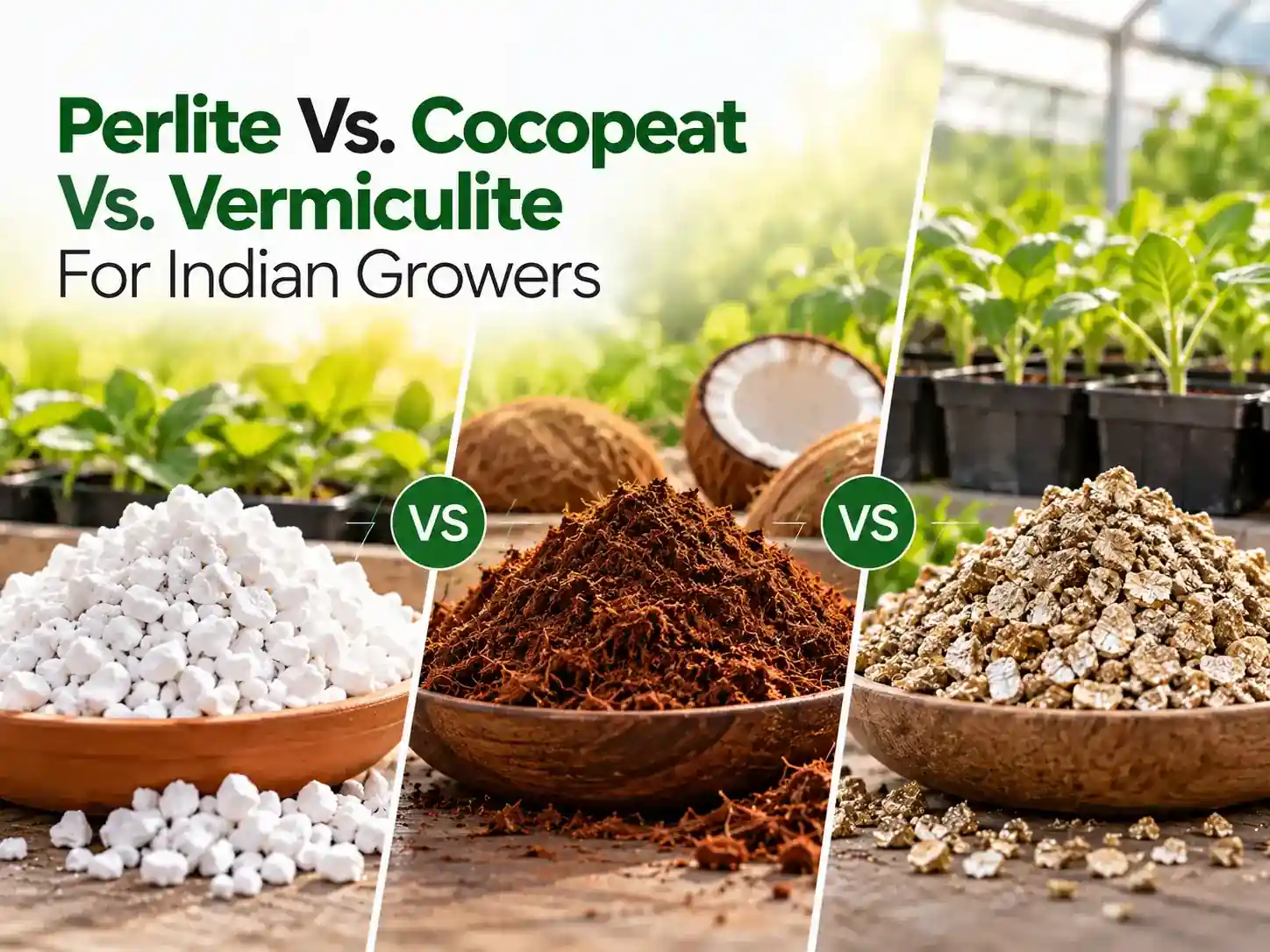
Ever wondered why some plants thrive in pots while others struggle despite regular watering? Sometimes, the secret lies beneath the roots! Choosing the right growing medium helps plants get the moisture, air, and support they need. For Indian gardeners dealing with hot summers, heavy monsoons, or limited balcony space, perlite, cocopeat, and vermiculite offer different benefits. Here’s a comparison of these three popular growing materials to help you discover which one works best for your plants and growing conditions!
1) What Are Perlite, Cocopeat, And Vermiculite?
Perlite: This lightweight, volcanic material expands when heated, creating tiny pores that improve aeration and drainage. It helps prevent potting mixes from becoming compacted, making it useful for container gardening and seedling mixes.
Cocopeat: Made from processed coconut husk fibres, cocopeat holds moisture while providing a lightweight growing medium. It is widely used in India for balcony gardens, seed starting, and soilless cultivation. It usually needs nutrients added because it does not supply a complete plant diet.
Vermiculite: This heat-expanded mineral absorbs and retains water while holding nutrients. It is particularly useful for seed starting and moisture-loving plants. Knowing the difference between perlite, cocopeat & vermiculite helps gardeners choose between improved drainage and greater moisture retention.
2) Water Retention: Which Medium Keeps Roots Hydrated?
Perlite: Perlite drains excess water quickly and leaves air spaces around roots. This makes it useful in humid monsoon conditions or for plants that dislike waterlogged soil. However, mixes containing ample perlite may require more frequent watering during India’s hot summers.
Cocopeat: Cocopeat retains considerable moisture, helping plants stay hydrated between watering sessions. It can be useful during hot weather, particularly for container plants that dry out quickly. However, overwatering remains possible if the container drains poorly.
Vermiculite: Vermiculite holds more water than perlite and releases moisture gradually. It can help keep seed-starting mixes evenly moist. In humid conditions, however, excessive amounts may leave certain mixes too wet for plants that prefer drier roots.
3) Aeration and Root Growth: Helping Roots Breathe
Perlite: Its porous structure improves airflow and drainage around roots, encouraging healthy root development. It works particularly well in mixes for succulents, cacti, and other plants that need well-drained conditions.
Cocopeat: Cocopeat provides a soft, lightweight structure that supports roots and holds moisture. Its aeration depends on fibre quality, particle size, and how tightly the medium is packed. Mixing it with perlite can improve drainage.
Vermiculite: Vermiculite supports moisture-loving seedlings but may compact in some mixes when used excessively. Combining it with other materials can help balance water retention and airflow, depending on the plant’s requirements.
4) Which Growing Medium Suits Indian Conditions?
Perlite: A useful choice for monsoon-prone regions, humid balconies, and plants sensitive to excess water. Mix it with potting soil or cocopeat to improve drainage, especially when growing succulents or herbs.
Cocopeat: A practical option for urban gardeners, terrace growers, and seed starters. Choose properly processed cocopeat and check its salt content if the quality is uncertain. Add suitable nutrients and ensure containers have drainage holes.
Vermiculite: Best suited to seed germination and plants that benefit from consistent moisture. Use it thoughtfully in India’s humid regions to avoid keeping roots excessively wet.
5) Perlite Vs. Vermiculite: Which Should You Choose?
Perlite: Opt for perlite when drainage and airflow are your priorities. It is especially helpful for plants that dislike soggy roots and can be mixed with cocopeat to create a more balanced growing medium
Cocopeat: Cocopeat is suitable when you need a lightweight growing medium that retains moisture. It works well for container gardening and seed starting, but requires suitable nutrients and proper drainage for healthy plant growth.
Vermiculite: Choose vermiculite when moisture retention is more important, particularly for seed starting. The choice in perlite vs vermiculite depends on your plant’s water needs, local climate, and watering routine. Neither material replaces a complete growing mix.
In Conclusion
Perlite, cocopeat, and vermiculite each serve a different purpose. Perlite improves drainage, cocopeat retains moisture, and vermiculite helps keep growing mixes hydrated. For many Indian gardeners, combining materials can offer a practical balance. Start with your plant’s needs, consider your local weather, and adjust the mix to support healthy roots and steady growth.
Your Industry Has Unique Needs. Amol Minechem Has Solutions Worth Exploring!