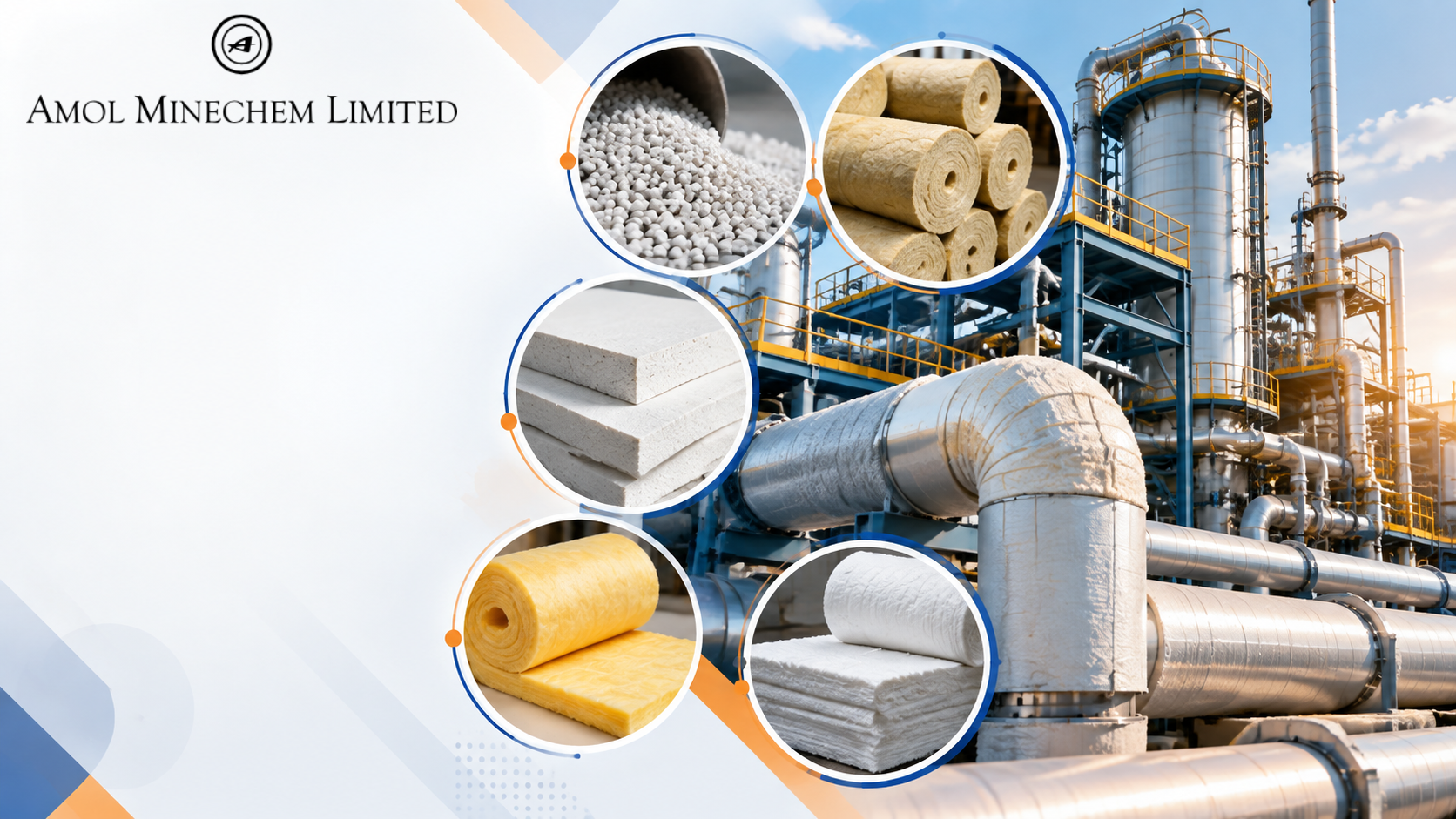
Industrial facilities deal with heat every day, from hot pipes and boilers to furnaces, tanks, and processing equipment. Without suitable insulation, valuable energy can escape, surfaces can become dangerously hot, and operating costs can rise. The right thermal insulation material helps control heat transfer while supporting safer and more efficient operations. Different industries use different materials depending on temperature, equipment, moisture, and installation requirements.
Here Are Different Types Of Thermal Insulation Materials That Are Used In Industrial Applications!
1) Fibreglass Insulation
Fibreglass is a widely used insulation material because it is lightweight, practical, and suitable for many industrial applications. It is commonly used around pipes, ducts, tanks, and equipment where moderate temperature control is required. Its fibrous structure traps air and slows heat transfer. Fibreglass can also be available in forms such as blankets, boards, and pipe sections, making it relatively flexible for different installation needs.
2) Mineral Wool Insulation
Mineral wool is valued for its thermal performance and ability to handle higher temperatures than many conventional insulation products. It is commonly used for industrial pipes, vessels, boilers, and other equipment that operate under demanding conditions. It can also provide useful fire-resistant properties. For facilities where both heat control and durability matter, mineral wool can be a dependable insulation option.
3) Calcium Silicate Insulation
Calcium silicate is designed for demanding high-temperature environments and is frequently used in industrial plants, particularly around steam systems, boilers, and high-temperature piping. It is rigid, durable, and capable of maintaining its insulating performance under elevated operating temperatures. Its strength also makes it suitable for applications where insulation needs to withstand regular industrial conditions without easily losing its shape.
4) Ceramic Fibre Insulation
Ceramic fibre is especially useful when extremely high temperatures are involved. It is commonly found in furnaces, kilns, heat-treatment equipment, and other applications where ordinary insulation may not be suitable. The material is lightweight and offers excellent resistance to intense heat. However, selecting and installing it correctly is important, as high-temperature industrial environments require materials that meet the specific operating conditions.
5) Foam Insulation Materials
Foam-based insulation materials are often selected where lower-temperature applications require effective thermal control and moisture resistance. Depending on the specific product, they can be used around pipes, refrigeration systems, tanks, and equipment. Their relatively lightweight nature can also make installation convenient. However, temperature limits vary considerably between foam types, so choosing the correct product for the application is essential.
In Conclusion
There is no single insulation material that suits every industrial environment. Fibreglass, mineral wool, calcium silicate, ceramic fibre, and foam each offer different advantages for specific conditions. A reliable thermal insulation supplier like Amol Minechem can help businesses compare temperature ratings, durability, moisture resistance, installation requirements, and application needs before selecting the most suitable thermal insulation material.
Turn Better Materials into Better Results with Engineered Solutions from Amol Minechem!